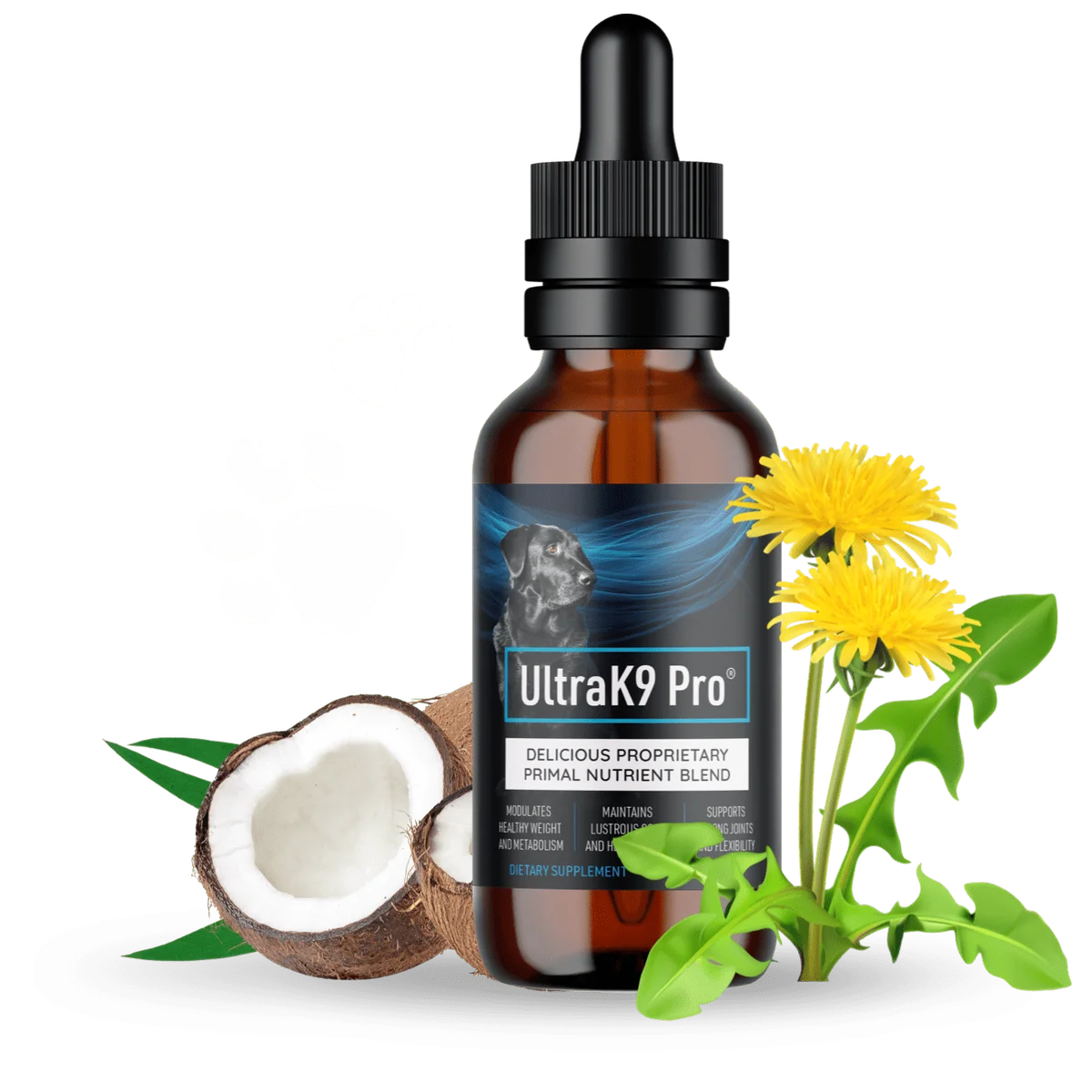
Category buyer guide · United States
Pet Wellness Buyer Guides
Daily probiotics, coat & skin support, joint & digestive aids for dogs
1Products reviewed
GMPFacility claims checked against manufacturer info
12Cited research sources
Pet wellness supplements are one of the fastest-growing verticals in natural health — and one of the least regulated. Dogs metabolize supplements differently than humans, tolerate different ingredients, and depend entirely on their owner to run a consistent daily routine. Our buyer guides in this category focus on formulations whose strain lists, CFU counts, and per-serving milligrams are publicly disclosed, whose manufacturers operate in U.S. GMP-registered facilities that also produce pet-food-grade products, and whose marketing pages don't hide the actual per-serving cost behind countdown timers. We do not feature products that promise to "cure" any diagnosed veterinary condition, that use human-only ingredients unsafe for canines (xylitol, garlic, grapes / raisins, macadamia), or that lack a veterinary-nutritionist review on file. The goal is to help pet owners spend $35 to $70 per month on a supplement they can actually keep giving for 8 to 12 weeks — and see whether their dog's coat, gut, or energy responds — instead of cycling through three different bottles a season and never knowing what worked.
What to look for in pet wellness supplements
A credible dog probiotic or pet wellness supplement in 2026 anchors on strains with published canine research (Lactobacillus acidophilus, Bifidobacterium animalis, Enterococcus faecium SF68 for gut; Saccharomyces boulardii for post-antibiotic recovery), CFU counts of 1 to 5 billion per daily serving (higher for large breeds), and disclosed prebiotic fiber content (inulin, FOS) to feed the probiotic strains. Coat and skin formulas should list omega-3 fatty acid sources (fish oil or algae) with EPA + DHA totals disclosed. Joint formulas should list glucosamine sulfate and chondroitin milligrams per serving. What you want on a label is (1) full strain-level ingredient disclosure, (2) a National Animal Supplement Council (NASC) seal or equivalent third-party quality mark, (3) U.S. GMP-registered manufacturing on a pet-food-grade line, (4) a refund window of at least 60 days, and (5) explicit age / breed / size guidance. Serving format matters: chewables suit dogs that treat pills as suspicious; powder that sprinkles onto food works best for large breeds and picky eaters.
All Pet Wellness products (1)
Every product below has passed our four-screen audit: official-source verification, ingredient-dose disclosure, U.S. GMP-facility confirmation, and refund-window honesty.
What we screen out
We don't feature pet products that promise to "cure" diagnosed veterinary conditions (parvovirus, mange, chronic pancreatitis, cushing's), that use ingredients toxic to dogs (xylitol as a sweetener, garlic, grapes / raisins, macadamia nuts, chocolate, onion powder), or that hide strain identities behind a "proprietary probiotic blend." We reject products lacking a National Animal Supplement Council seal or equivalent quality-mark disclosure, products manufactured on human-food lines without documented pet-food-grade protocols, and products whose marketing shows before / after photos without verifiable date stamps or veterinary sign-off. We also flag products that recommend the same dose for a Chihuahua as a Great Dane — proper canine dosing scales with body weight — and products marketed as "cures" for chronic conditions like allergies or arthritis, which supplements can support but cannot resolve.
Pet Wellness buyer FAQ
Direct answers to the questions buyers most commonly ask us about pet wellness supplements.
Do dog probiotics actually work?
For dogs with occasional soft stools, mild digestive upset, post-antibiotic recovery, or diet transitions, probiotic supplements with veterinary-studied strains (Enterococcus faecium SF68, Bifidobacterium animalis, Saccharomyces boulardii) have peer-reviewed canine evidence behind them. They reliably improve stool consistency and gut microbiome balance over 4 to 8 weeks of daily use. They are a routine-support tool, not a treatment for parvovirus, IBD, or any diagnosed condition — those require veterinary care. Buyers expecting an overnight fix for chronic issues will be disappointed; buyers using them as a steady daily wellness layer usually notice meaningful gut, coat, and energy improvements.
How long until I see a difference in my dog?
The first clear signal — usually firmer, more consistent stools — appears at 2 to 4 weeks with daily use. Coat softness and shine typically show at 6 to 10 weeks because coat turnover is slow. Energy and mood changes are more subtle and depend heavily on the dog's baseline diet and activity. Full evaluation of any pet supplement is a 60- to 90-day process — anything claiming visible results in the first week is either selling a placebo or describing a stool-firming effect from added fiber rather than actual microbiome change.
Are pet supplements safe alongside my dog's prescription medication?
Most probiotic and coat / joint supplements are safe alongside standard veterinary prescriptions, but dogs on antibiotics, corticosteroids, or immunosuppressants should have their vet sign off before starting a probiotic — the interaction with the underlying condition matters more than the supplement itself. Dogs with a diagnosed condition (kidney disease, diabetes, cushing's, cancer) should always have supplement additions cleared by the treating vet. When in doubt, bring the label to your next vet appointment.
Can I use one supplement for multiple dogs of different sizes?
Yes, but the dosing has to scale with body weight — the label's dosing chart is the reference. A typical dog probiotic dose is one scoop / chew per 25 pounds of body weight, capped at three servings per day for large breeds. A Chihuahua needs a small fraction of what a Golden Retriever needs. Never assume "one scoop is enough" for a large-breed dog or that a small dose is fine for a small dog — underdosing wastes money and overdosing wastes product without hurting the dog for well-formulated supplements.
Should I see a vet before starting a supplement for my dog?
For dogs with a diagnosed condition, chronic loose stools lasting more than two weeks, unexplained weight loss, or on any prescription medication — yes, always. A veterinary visit rules out the underlying cause (parasites, allergies, IBD, pancreatic insufficiency) so you're not covering a symptom that needs real treatment. For healthy dogs whose owners want a daily wellness layer, most probiotic and coat / joint supplements can be added to the routine without a vet visit, but a routine wellness check-in every 6 to 12 months is a good baseline for any daily supplement.
How do you decide which pet products to feature?
We require full strain-level disclosure with CFU counts, a National Animal Supplement Council seal or equivalent quality mark, U.S. GMP-registered manufacturing on a pet-food-grade line, a minimum 60-day money-back window, and copy that stays inside "support" language rather than promising cures or diagnosed-condition treatment. Products using ingredients toxic to dogs (xylitol, garlic, grapes, macadamia) are automatic disqualifiers. Products that fail any of those screens do not get a guide written, regardless of affiliate commission.
Cited research
The buyer guidance on this page is informed by peer-reviewed research. Linked sources open in a new tab and are externally hosted by NIH, NCBI, and PubMed.
- Enterococcus faecium SF68 — canine diarrhea probiotic trial ↗
- Saccharomyces boulardii in dogs — safety and efficacy review ↗
- Canine gut microbiome — modern research review ↗
- Omega-3 fatty acids for canine skin and coat ↗
- Glucosamine and chondroitin in dogs — joint support review ↗
- National Animal Supplement Council — quality standards ↗
- Xylitol toxicity in dogs — FDA consumer alert ↗
- Grapes and raisins — canine toxicity review ↗
- Probiotic — Wikipedia ↗
- Enterococcus faecium — Wikipedia ↗
- Saccharomyces boulardii — Wikipedia ↗
- Dog nutrition — Wikipedia ↗